DATA PROTECTION TRENDS, NEWS & BACKUP TIPS
Why a Data Recovery Lab Hired a Crisis Counselor
In an unassuming building in Novato, California, DriveSavers Data Recovery keeps something they call the Museum of Bizarre Disk-asters. Inside this museum are devices that survived house fires, snowblowers, monorails, and ocean sinkings. The machines on those shelves are a kind of optimism. They tell customers that even something extraordinary can usually be brought back.
The newest exhibit is different, and it has nothing to do with accidents.
Ransomware recoveries at DriveSavers went from fewer than 50 cases in 2023 to nearly 300 in 2024. Somewhere along that curve, the company hired a dedicated data crisis counselor. The role exists because the calls coming in now require a different kind of help. The counselor before this one came from a suicide-prevention hotline.
A data recovery lab decided it needed someone trained to talk people through the worst day of their professional lives. That hire is a leading indicator, and it tells you something about who is calling and how unprepared they are for what comes next.
SMBs Are Now the Main Target
For most of the past decade, ransomware coverage has focused on hospital systems, oil pipelines, and Fortune 500 outages. The center of gravity has moved.
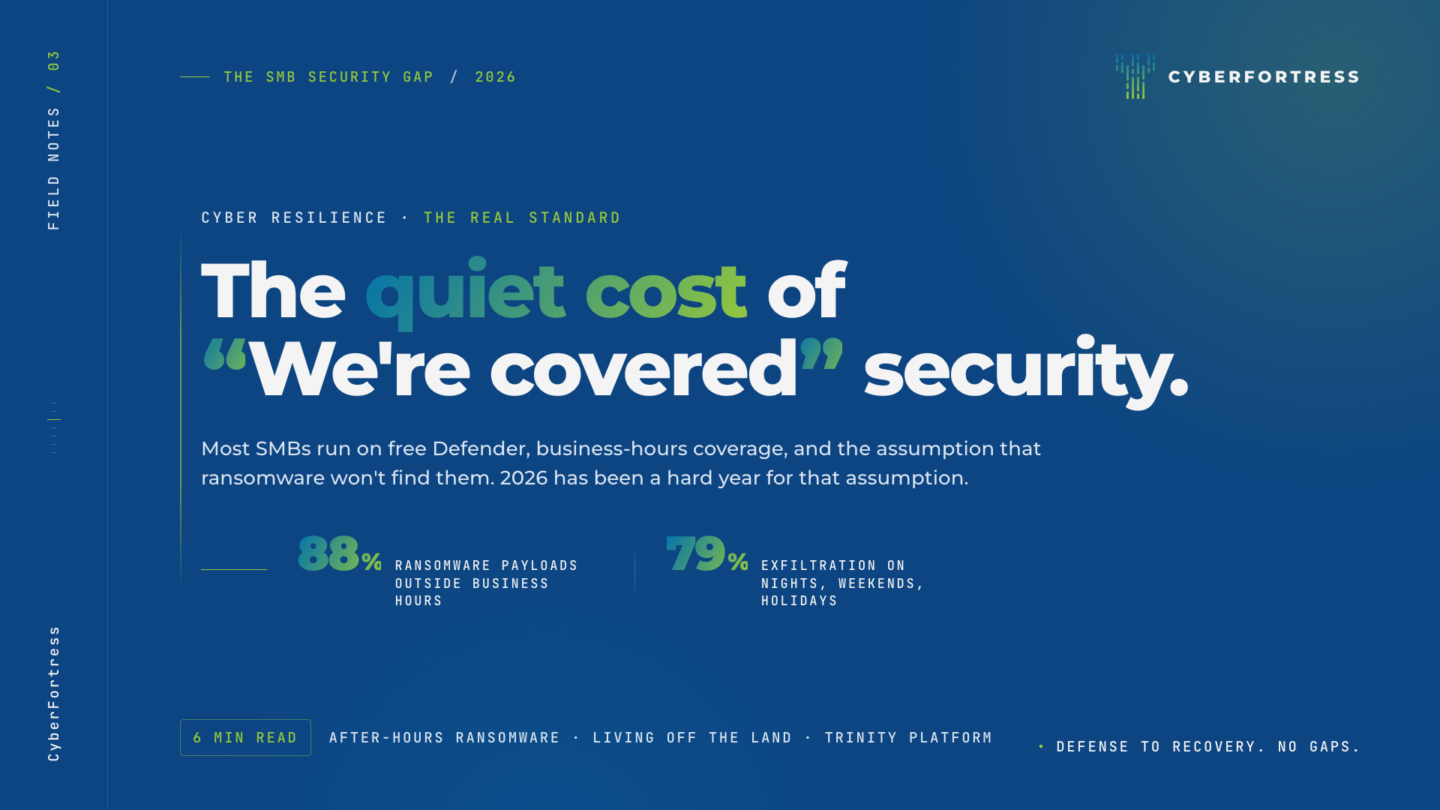
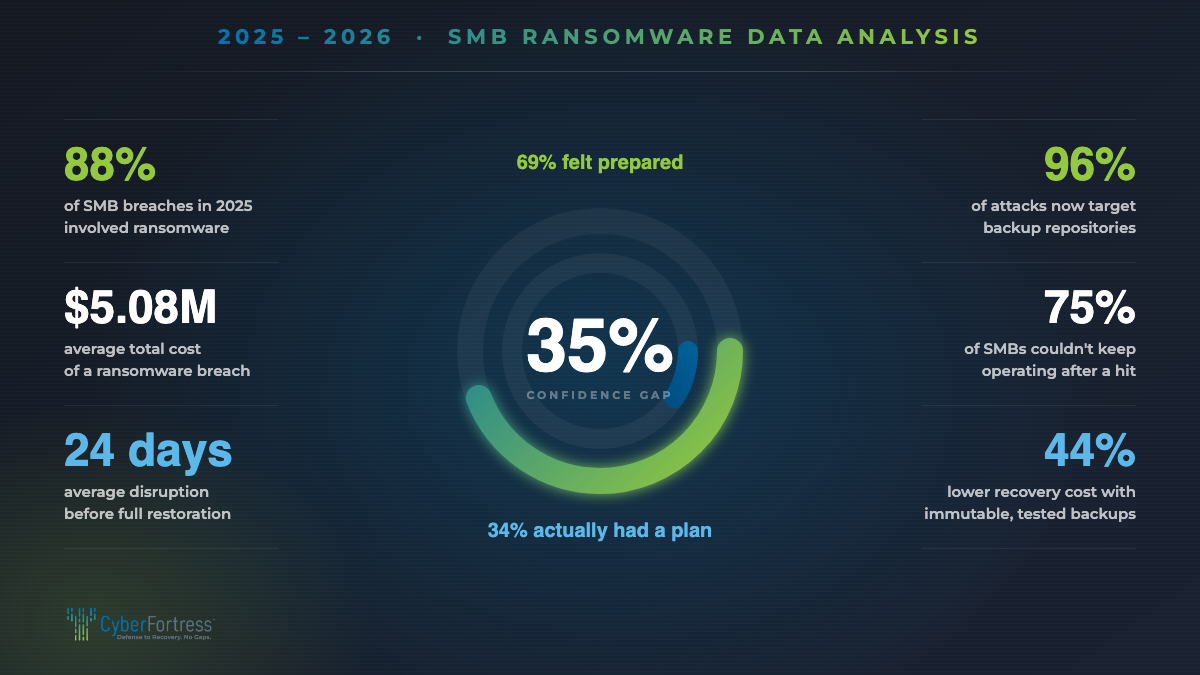
In 2025, 88% of breaches at small and mid-sized businesses involved ransomware, compared with 39% at large enterprises. More than two thirds of ransomware incidents now hit organizations with fewer than 500 employees. The reasons are not mysterious. SMBs hold valuable data, run on stretched IT teams, often rely on inconsistent backup strategies, and rarely have the budget for a 24/7 security operation. Ransomware-as-a-service has lowered the technical bar on the attacker side. The math has tilted hard.
The Confidence Gap
The most dangerous statistic in this space is the gap between what SMB leaders believe about their readiness and what their readiness actually is.
69% of businesses said they were well-prepared before they were breached. Only 34% have a formal incident response plan. Only 13% conduct proactive cybersecurity audits. 75% admit they could not continue operating if they were hit.
The companies on those phone calls into DriveSavers live almost entirely inside that gap. They believed the basics were covered. They had never tested the assumption.
What an Attack Actually Costs
The ransom demand makes for a clean headline number. Most of the financial damage shows up elsewhere.
IBM’s 2025 Cost of a Data Breach Report puts the average total cost of a ransomware breach at $5.08 million. Sophos puts the average recovery cost, excluding ransom, at roughly $1.53 million. Downtime alone exceeds the ransom payment by about 100%, with the average disruption running 24 days before full restoration. Healthcare incidents average $7.42 million. Manufacturing production lines lose around $260,000 per hour while operations are down.
In 70% of 2025 ransomware claims, attackers exfiltrated data before encrypting it. Those incidents cost more than twice as much as encryption-only cases, because the leverage shifts from the keys to your files to the keys to your reputation.
The Backup You Have Probably Won’t Save You
One statistic should make every SMB leader sit up. 96% of ransomware attacks now target backup repositories. Modern operators move laterally, identify backup infrastructure, and either delete or encrypt those copies before they touch the production environment.
The implication is uncomfortable. A backup that lives on the same network as production, uses the same identity provider, or has never been tested under pressure is not a backup in the way SMB leaders usually mean the word. It is a copy an attacker can erase on the way to the ransom note.
The organizations that recovered without paying in 2025 had something specific in common. Their backups were offline, immutable, and tested. That configuration cut recovery costs by 44% versus paying the ransom.
What Resilience Actually Looks Like
The phrase “we have backups” has done a lot of damage in the SMB market. The phrase that needs to replace it is “we have cyber resilience.”
Resilience treats protect, detect, and recover as three pillars of one operating discipline rather than three line items on three different invoices.
Protect means the data that runs the business lives somewhere ransomware cannot reach with stolen credentials. Immutable, air-gapped, identity-isolated storage are baseline now, not premium.
Detect means somebody is watching around the clock, with the expertise to tell signal from noise. The most consequential ransomware actions in 2025 happened outside business hours, when most SMBs have no one watching. Closing that window changes outcomes.
Recover means the restore has been rehearsed, not assumed. Plenty of organizations discover the gaps in their recovery plan during the recovery itself, when there is no time left to fix them.
How the CyberFortress Trinity Platform Closes the Loop
The CyberFortress Trinity Platform was built around that three-pillar view. It pairs DeepSeas Endpoint MDR for 24/7 expert detection and response with Veeam-powered backups in immutable, geo-separated storage and orchestrated, validated recovery.
The shift that matters is operational. Protect, detect, and recover stop being three separate purchase decisions handed to three different teams. They start working together, with one provider accountable for the outcome. For an SMB, that change matters more than any individual feature.
Three Questions Worth Sitting With
If the DriveSavers story landed somewhere uncomfortable, three questions are worth taking into your next leadership meeting.
- If our most critical systems were encrypted on a Friday night, what could we restore from a backup the attacker cannot reach, and have we actually tested it?
- Who is watching our environment at 2 a.m. on a holiday weekend, and what authority do they have to act before any of us sees the alert?
- When was the last time we measured our security posture against what could realistically go wrong, instead of against a checklist?
The companies that survive the next wave of SMB ransomware will not be the ones with the largest budgets. They will be the ones that took those questions seriously and built the answers before they needed them.
No SMB leader wants to be the next call into that data crisis counselor’s queue. The work to avoid it begins well before the phone rings.