Backup Verification for Enterprise Audits in 2026
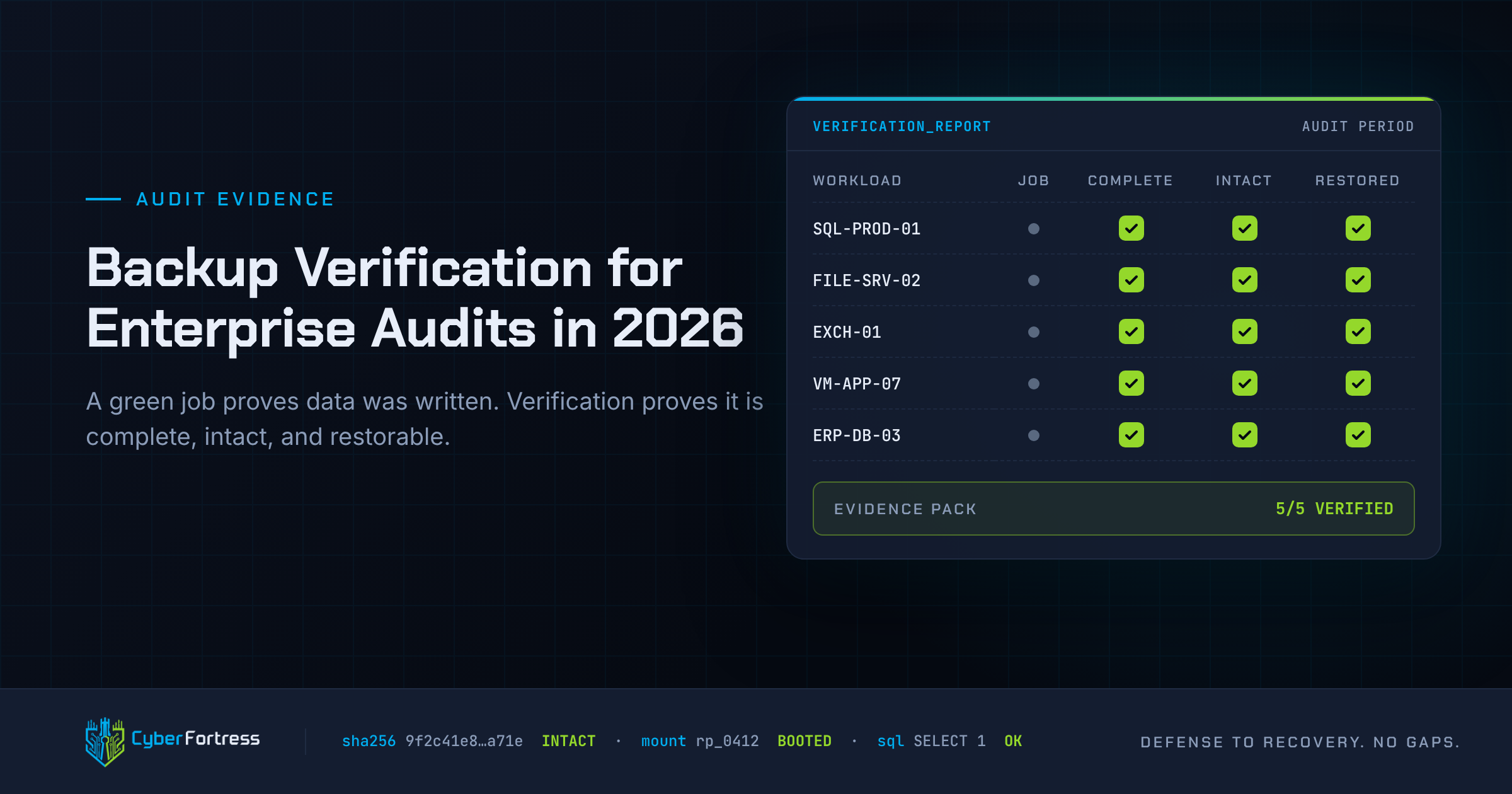
Audits fail because a successful backup job proves only that data was written. Auditors want evidence of scope, retention, immutability, and tested recovery. Verification closes that gap by proving three things: the backup is complete, the data is intact, and a restore produced a usable result.
Why do audits fail when every job is green?
Because job status measures the transfer. A job can succeed while the wrong volumes are in scope, while a database was captured without application consistency, while retention silently shortened, or while the recovery point is corrupt.
Green means “the software finished.” A backup you cannot trust the status of is just a guess with a green checkmark, and auditors learned that before most IT teams did.
What are the most common findings?
- Scope gaps, where systems in the asset inventory do not appear in any protection policy.
- No evidence of restore testing, or evidence older than the audit period.
- Retention configured shorter than the stated policy.
- Backups deletable by production administrators, with no immutability.
- Missing access and deletion logs for the backup platform.
- Recovery procedures documented but never exercised, and out of date.
- Encryption in place without documented key management.
Every one of these was true for months before the auditor arrived. The audit is the discovery event, and it is a comparatively gentle one.
What does real backup verification include?
Completeness verification
Reconcile the asset inventory against protection policies on a schedule and flag anything unprotected. This is the finding that appears most often and the one that is easiest to prevent.
Integrity testing
Use checksum or hash validation on stored recovery points to detect silent corruption, and run it continuously. Corruption discovered the week before an audit has usually been there for a year.
Recoverability verification
Boot or mount recovery points automatically to prove they are usable. Application-aware verification, such as confirming a database starts and accepts a query, is stronger evidence than a mounted volume.
Restore testing with documented outcomes
Perform real restores on a defined cadence, record what was restored, how long it took, who performed it, and whether it met the stated RTO. This is the artifact auditors ask for most often and organizations produce least often.
Immutability attestation
Show the mechanism, the lock duration, and confirmation that no administrative role can override it during retention.
How should evidence be organized?
Keep a single evidence pack per audit period containing the scope reconciliation report, retention configuration export, integrity test results, restore test log with timings, immutability configuration, access and deletion logs, and a signed statement of who owns backup operations.
Assemble it monthly. Reconstructing eleven months of history during audit week is where teams lose days they had planned to spend on something else.
How does this connect to disaster recovery planning?
Verification and disaster recovery planning are the same discipline at different scales. Verified restores prove individual recovery points work. A rehearsed disaster recovery test proves the sequence works.
Auditors increasingly ask for both. Insurers ask for the second one and they ask before they price the policy.
Frequently asked questions
How often should restores be tested? Monthly for a sample of workloads and quarterly for a full critical system, with an annual full-sequence recovery exercise. Adjust upward if your environment changes rapidly.
Is automated verification enough on its own? It is necessary but not sufficient. Automated verification proves recoverability at scale. A human-led restore test proves the runbook and the people work.
Next step
CyberFortress produces scope reconciliation, verified restore results, and immutability attestation as part of the service, in a format that goes straight to the auditor.
A backup you have never restored is a guess. Trinity turns it into proof.
Seven questions show where your recovery plan stands today. Or skip ahead and talk to a CyberFortress recovery specialist about your environment.
More from the Fortress
-
Backup Verification for Enterprise Audits in 2026
Audits fail because a successful backup job proves only that data was written. Auditors want evidence of scope,…
-
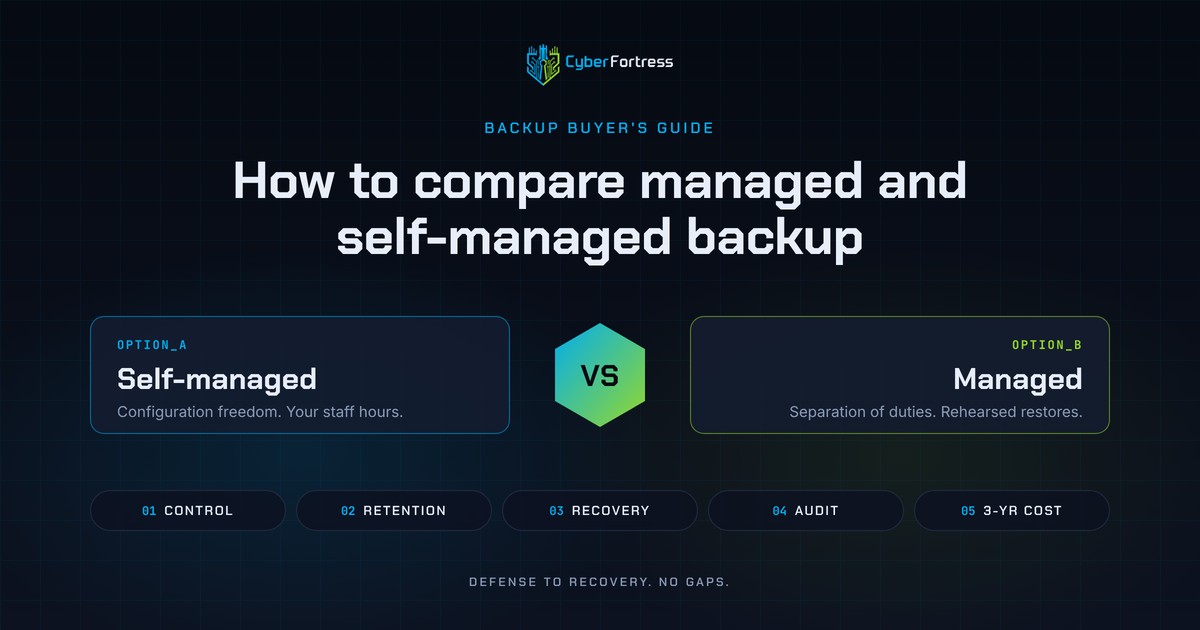
How to Compare Managed and Self Managed Backup
Compare the two on five dimensions, in this order: control, retention and immutability, recovery capability, audit readiness, and…
-
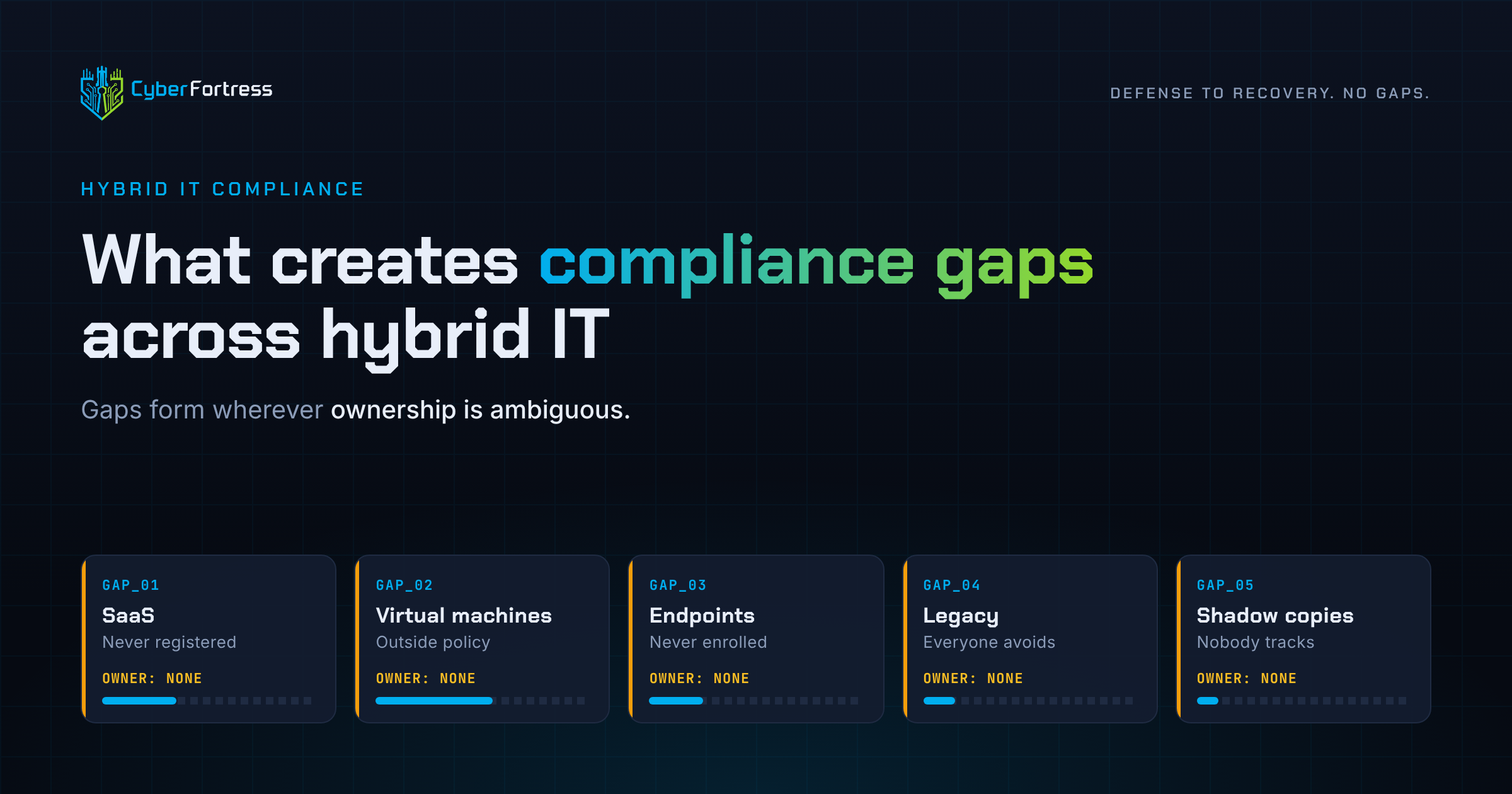
Why does hybrid IT produce gaps so reliably?
Because controls are designed per environment while data moves across them. A policy written for the data center…
-
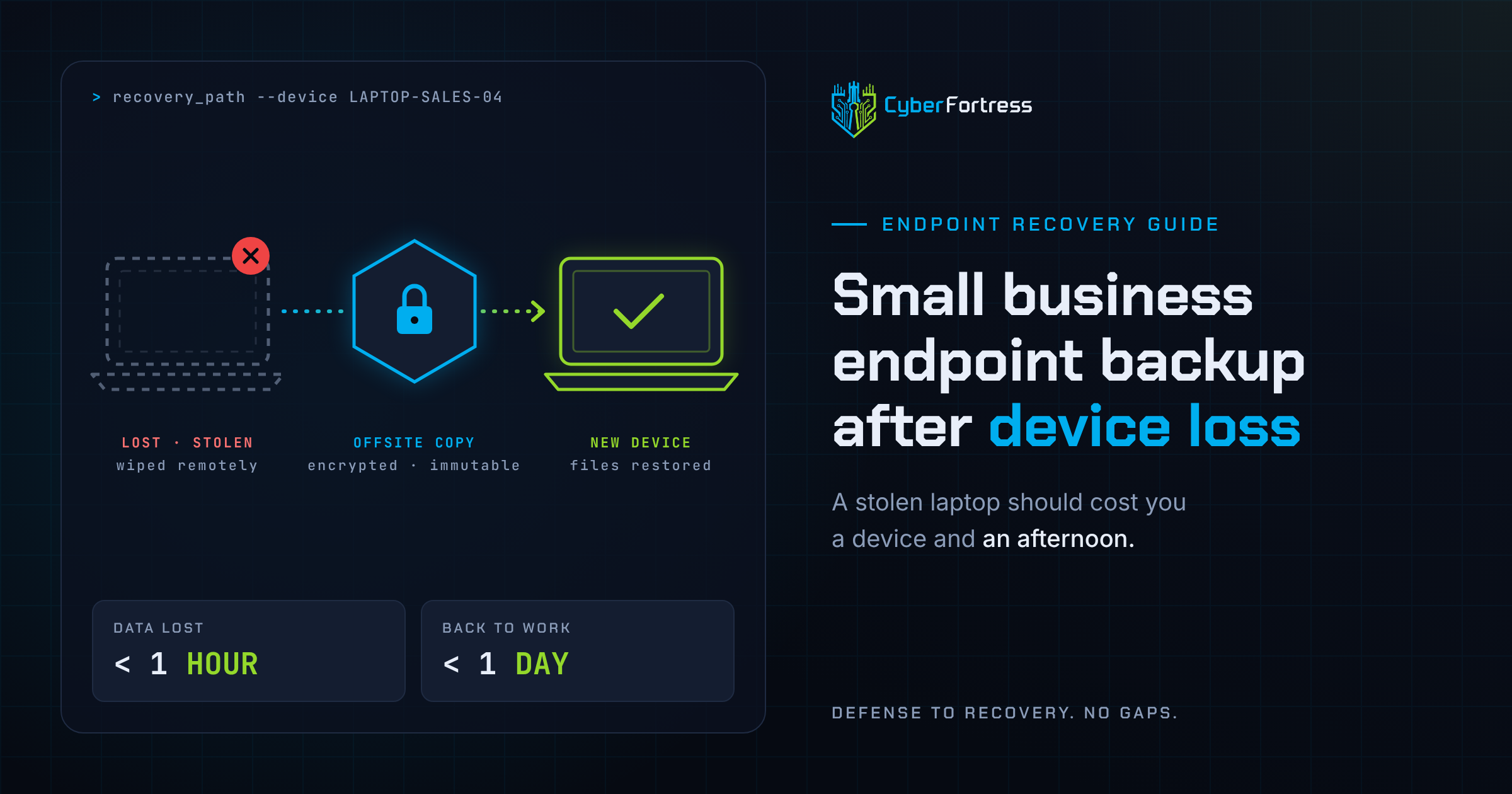
Small Business Endpoint Backup After Device Loss
Endpoint backup works when it is continuous, encrypted, offsite, independent of the device, and tested. A stolen laptop…