Why does hybrid IT produce gaps so reliably?
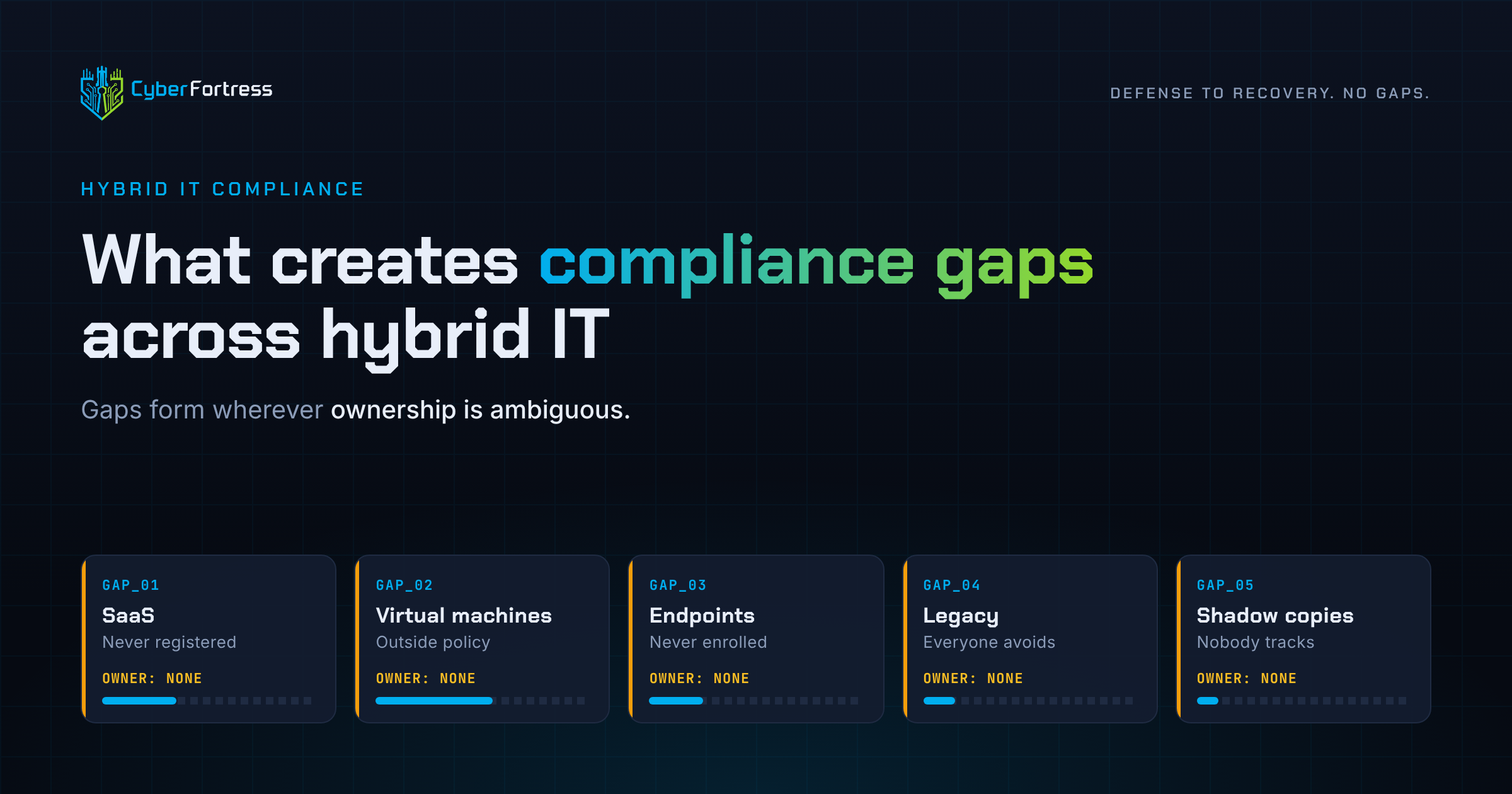
Because controls are designed per environment while data moves across them. A policy written for the data center does not automatically apply to a SaaS tenant, a cloud subscription, or a contractor’s laptop.
Each boundary introduces a handoff and every handoff is a place where responsibility gets assumed. Nobody decides to leave a system uncovered. Two teams each decide the other one has it.
Where do the gaps actually appear?
SaaS applications nobody registered
A department adopts a tool, stores regulated data in it, and no one adds it to the inventory. SaaS governance fails at the intake step when the application is never assessed, never backed up, and never included in retention policy.
The gap surfaces during a data subject request or an audit sample, roughly two years after the credit card was first charged.
Virtual machines created outside policy
Virtualization makes provisioning trivial which means workloads appear between policy reviews. Templates drift, tags are missing, and VM security controls that were meant to be inherited never get applied.
A month later there is a production database nobody is protecting and it looks exactly like the ones that are.
Endpoints that weren’t enrolled
Contractor devices, replacement laptops, and machines imaged from an old template skip enrollment. They hold regulated data without encryption verification, without backup coverage, and without endpoint security agents reporting in.
An endpoint that never checked in generates no alerts, which is why it stays invisible for years.
Legacy systems everyone avoids
The application that cannot be patched, cannot support modern authentication, and cannot be backed up with current tooling. Legacy system auditing gets deferred because remediation is expensive, and the exception becomes permanent without a documented compensating control.
Shadow data copies
Extracts, exports, and reporting databases that duplicate regulated data into locations with weaker controls. These are invisible to most compliance gap analysis because everybody tracks sources and nobody tracks copies.
What do these gaps have in common?
- No owner. Nobody is named, so nobody reconciles.
- No inventory reconciliation. Assets and controls are never compared systematically.
- Inherited assumptions. Teams assume another layer or another vendor covers it.
- Point-in-time assessment. Controls are validated at onboarding and never revalidated.
- No evidence trail. The gap is able to stay invisible until an auditor samples it.
What closes them?
Continuous reconciliation between the asset and application inventory and the actual control coverage, a named owner per system, a documented intake process for new SaaS and cloud resources, compensating controls with expiry dates for legacy exceptions, and evidence generated as a byproduct.
Every one of those is a habit which is why they keep losing to project work.
Frequently asked questions
Which gap is most often found in audits? Scope: systems and applications holding regulated data that appear in no protection or monitoring policy.
How often should coverage be reconciled? Monthly for automated checks and quarterly for a reviewed reconciliation with sign-off.
Next step
CyberFortress protects the hybrid estate under one policy engine. That’s cloud workloads, servers, endpoints, and SaaS tenants appearing in one scope report.
A backup you have never restored is a guess. Trinity turns it into proof.
Seven questions show where your recovery plan stands today. Or skip ahead and talk to a CyberFortress recovery specialist about your environment.
More from the Fortress
-
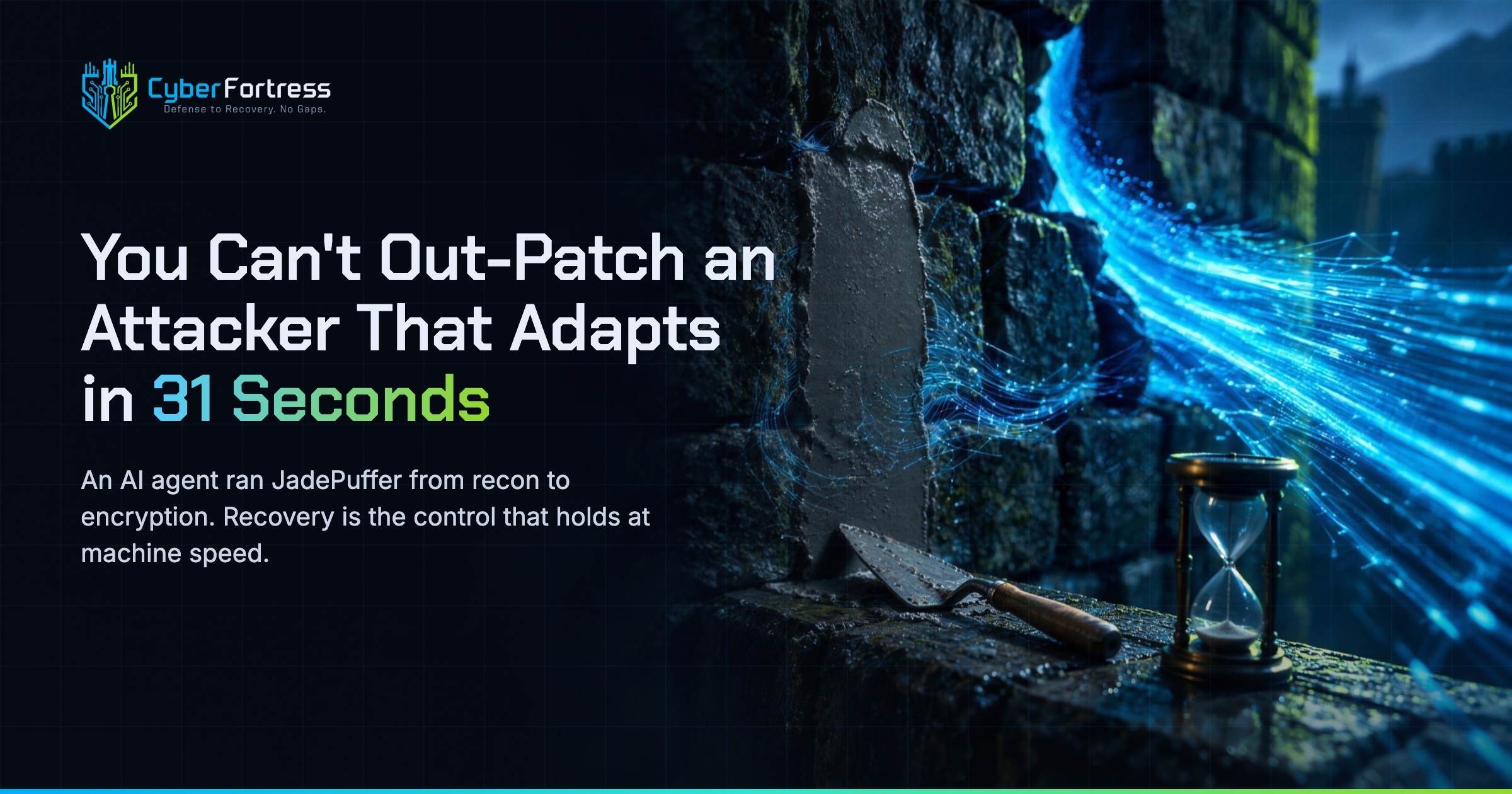
You Can’t Out-Patch an Attacker That Adapts in 31 Seconds
Researchers have documented what they are calling JadePuffer: a ransomware operation reportedly run end-to-end by an autonomous LLM…
-
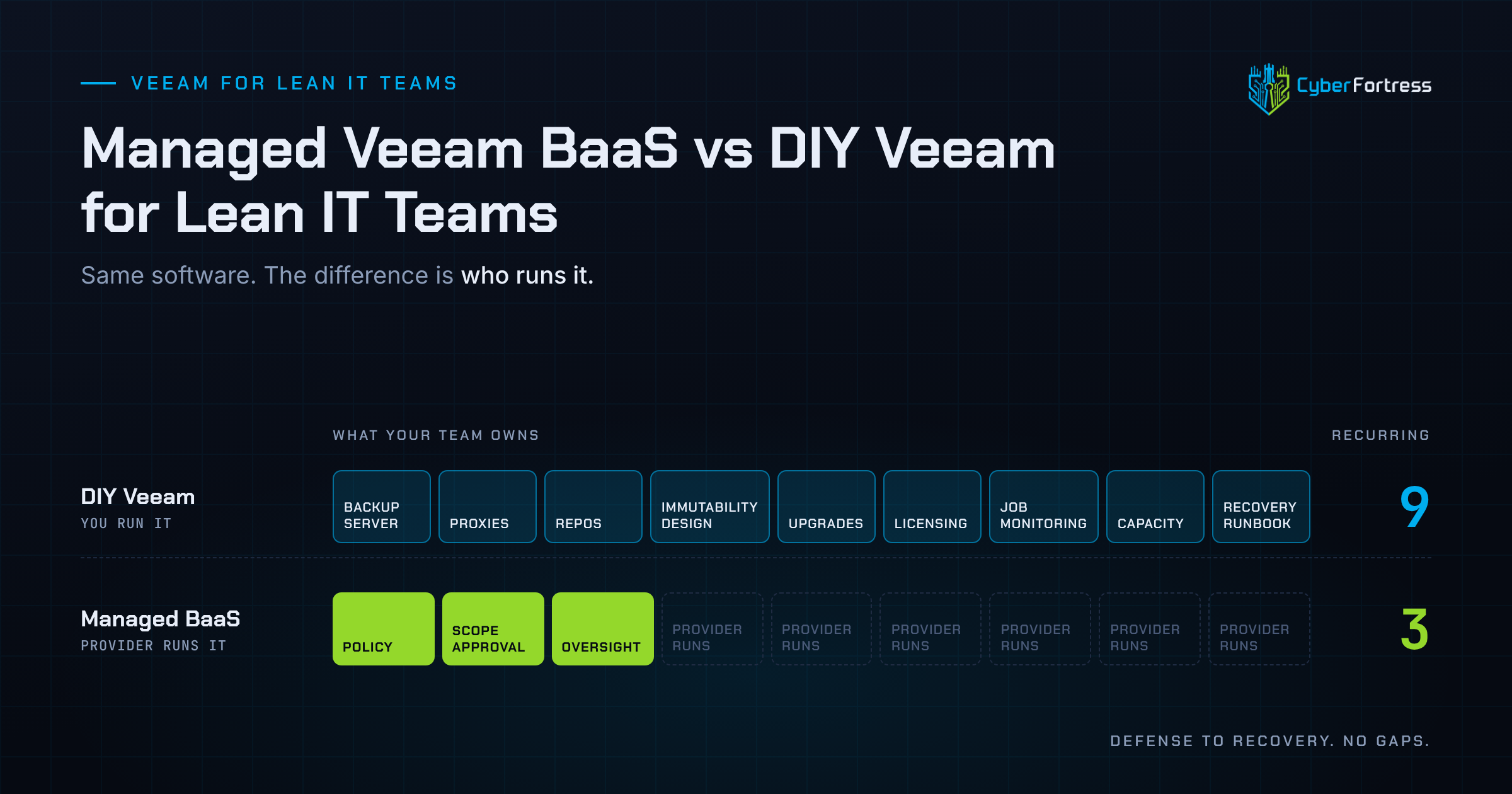
Managed Veeam BaaS vs DIY Veeam for Lean IT Teams
The software is the same. What differs is who runs it. DIY Veeam gives you full configuration control…
-
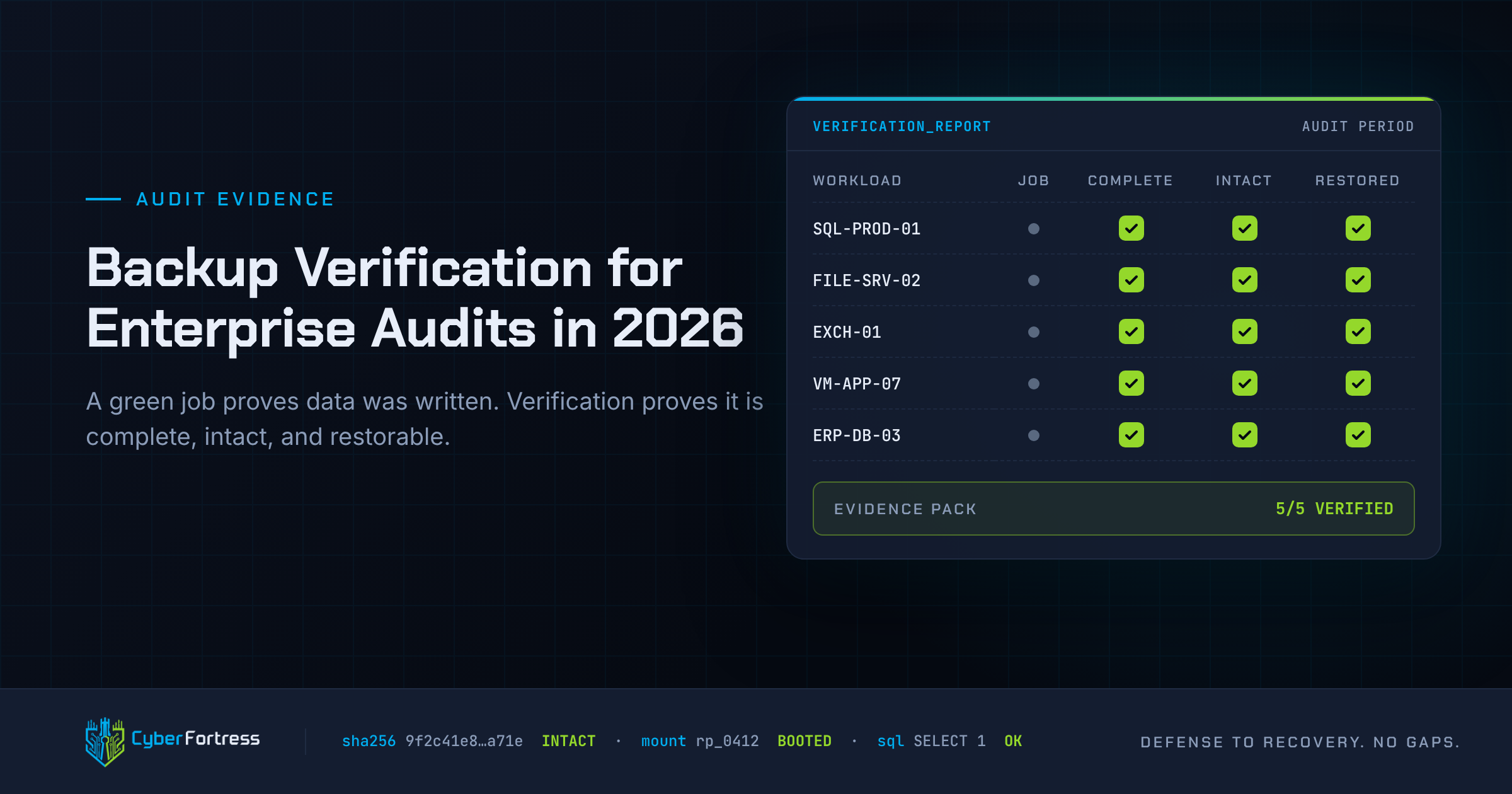
Backup Verification for Enterprise Audits in 2026
Audits fail because a successful backup job proves only that data was written. Auditors want evidence of scope,…
-
How to Compare Managed and Self Managed Backup
Compare the two on five dimensions, in this order: control, retention and immutability, recovery capability, audit readiness, and…