DATA PROTECTION TRENDS, NEWS & BACKUP TIPS
Why MDR Is Becoming Essential in 2026 and What It Means for Your Security Team
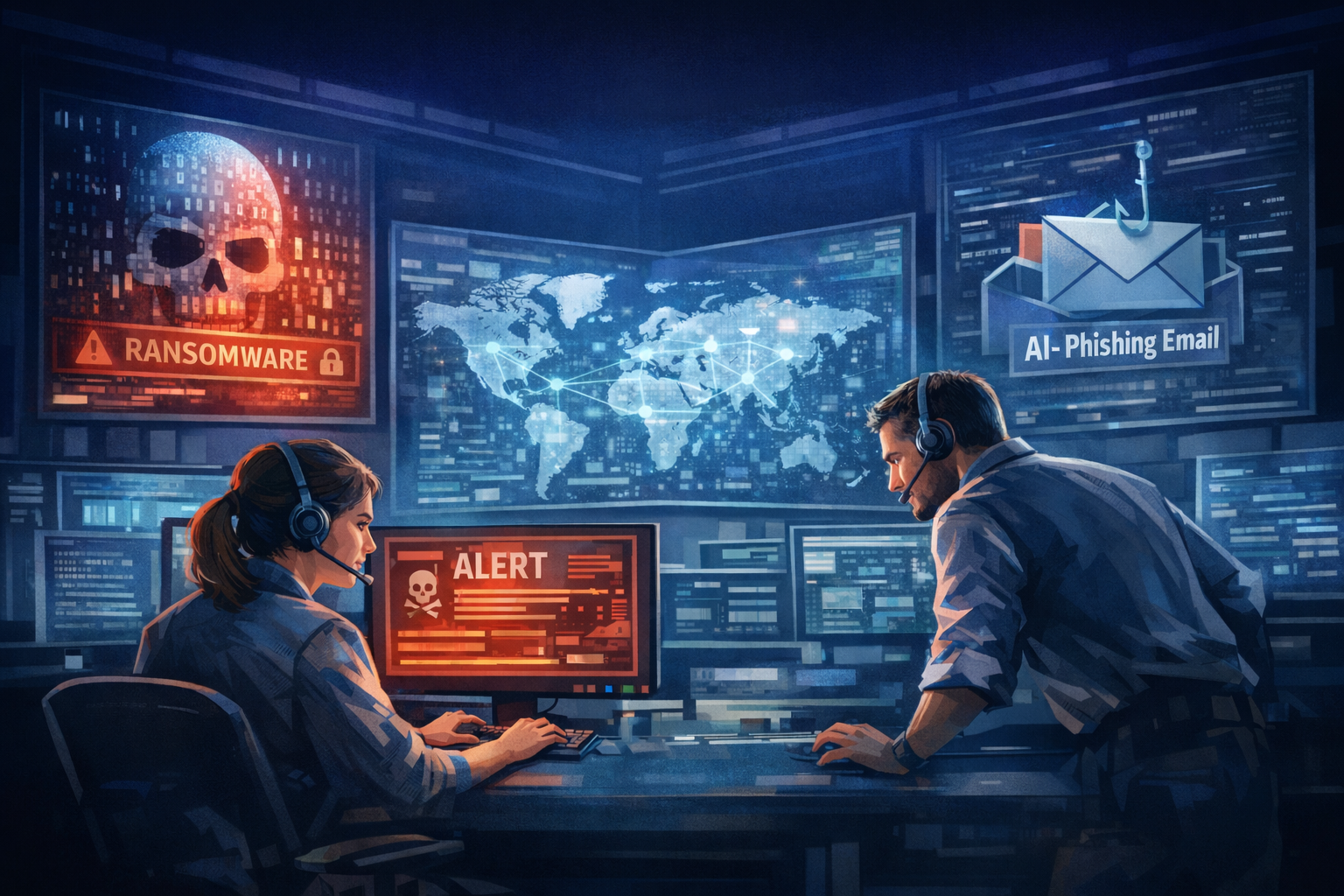
Cybersecurity leaders are carrying an impossible load right now. Attacks are moving faster, the signals are noisier, and the consequences are higher. Meanwhile, most teams are expected to do more with fewer people, tighter budgets, and increasing pressure from regulators and insurers.
This is why Managed Detection and Response (MDR) has moved from “nice to have” to a practical requirement for many organizations. MDR gives you continuous monitoring, expert-led investigation, and coordinated response when it matters most.
Below is a clear view of what is driving MDR adoption and how to evaluate an MDR program so it actually reduces risk, limits downtime, and helps your team sleep at night.
The threat landscape is faster, stealthier, and more disruptive
A few trends are showing up across incident reports, insurer guidance, and security research:
Ransomware remains a top business risk
Ransomware groups continue to professionalize and specialize. Many attacks now include data theft, extortion pressure, and rapid lateral movement designed to disrupt operations before a team can react. For defenders, the biggest variable is speed: how quickly you can detect suspicious activity and contain it.
Social engineering is getting harder to spot
Phishing and business email compromise continue to evolve, with AI helping attackers write more believable messages at scale. That leads to more credential theft, more unauthorized access, and more “quiet” breaches that do not trigger obvious alarms until damage is already underway.
Attack paths are more complex in hybrid environments
Even organizations that are not “cloud first” often have a mix of SaaS, on-prem systems, remote endpoints, and multiple identity providers. Attackers take advantage of that complexity. They pivot through weak points, blend into normal traffic, and exploit gaps between tools.
The takeaway is simple: prevention still matters, but detection and response speed increasingly determines business impact.
Why MDR is accelerating right now
1) Most organizations cannot staff a 24×7 security operation
Round-the-clock coverage requires multiple skilled analysts and a strong engineering backbone to tune detections, manage tooling, and run response playbooks. Many teams do not have the headcount to sustain that, and hiring has not gotten easier.
MDR fills that gap with dedicated expertise, continuous monitoring, and repeatable response workflows.
2) Regulations and insurers expect mature detection and response
Breach reporting windows, industry requirements, and cyber insurance expectations all push organizations toward stronger monitoring and response capabilities. MDR can help meet those expectations by improving visibility, accelerating investigation, and creating a consistent incident record.
3) Tool sprawl created more data than teams can realistically handle
Even well-equipped environments generate huge volumes of alerts and logs. MDR providers increasingly use automation and analytics to triage noise, correlate signals, and focus human attention on what matters.
What modern MDR should deliver
If you are evaluating MDR or communicating its value internally, these are the outcomes that matter most.
Continuous monitoring with real human accountability
You want more than a dashboard. You want a team that is responsible for watching, investigating, and escalating with context.
A strong MDR program provides:
- 24×7 monitoring across key telemetry sources
- Threat hunting to uncover suspicious patterns that do not generate standard alerts
- Clear escalation paths and severity definitions
- A named team responsible for outcomes, not just tooling
Fast triage and decisive containment
Time is the enemy during an active incident. MDR should reduce the time between initial signal and meaningful action.
Look for:
- Documented response playbooks (isolation, credential resets, containment steps)
- The ability to coordinate response quickly with your internal owners
- Practical guidance that reduces blast radius and preserves evidence
Broad visibility across endpoint, identity, cloud, and network signals
Attackers rarely stay in one lane. MDR needs enough coverage to connect the dots across environments, especially around identity and endpoint activity.
At minimum, you should understand:
- What data sources are monitored
- How detections are tuned to your environment
- How the MDR team handles correlation across multiple tools
Clear reporting that improves your posture over time
A good MDR partner does not stop at closing tickets. They help reduce future risk by identifying patterns and advising on improvements.
That includes:
- Root cause and timeline reporting
- Recommendations tied to real observed risk
- Prioritized remediation guidance that fits your constraints
Where MDR fits in your overall security strategy
MDR works best as an operational layer that turns security intent into daily execution. Many organizations have strong policies and solid tools, but struggle with consistency across nights, weekends, and busy periods.
MDR helps create:
- Consistent monitoring and response across all hours
- Reliable incident documentation for leadership, auditors, and insurers
- A feedback loop that strengthens controls over time
- A path to maturity without requiring you to build a full internal SOC
How CyberFortress MDR supports your team
CyberFortress approaches MDR with two priorities: protect the business and support the people running it.
Protection that stays on, even when your team cannot
CyberFortress MDR is built for continuous coverage and rapid escalation. When suspicious activity occurs, our team focuses on practical next steps that reduce impact quickly.
Expertise that is calm, clear, and actionable
During incidents, teams need clarity. You will get direct, prioritized guidance, written for operators. The goal is to help you make decisions faster and contain threats with confidence.
A maturity path, not a one-time event
Beyond incident handling, CyberFortress MDR is designed to help you strengthen detection quality and reduce repeat exposure over time through structured recommendations and recurring insights.
A simple MDR readiness checklist
Use this as an internal scorecard when evaluating MDR options or communicating what your organization needs.
- Do we have 24×7 monitoring and escalation coverage today?
- How quickly can we confirm whether an alert is real?
- Can we contain an endpoint compromise within minutes, not hours?
- Do we have strong visibility into identity events and credential misuse?
- Are response playbooks documented and practiced?
- Do we produce incident reports that leadership can understand and act on?
- Do we have a steady plan for improving posture based on real activity?
If several of these items are uncertain, MDR can materially reduce risk.
Closing: MDR is a practical response to modern risk
Organizations are facing faster attacks, higher expectations, and limited internal capacity. MDR gives teams a way to respond with speed and discipline while building a stronger program over time.
If you want to pressure-test how MDR fits your environment, CyberFortress can help you assess your current coverage, identify gaps, and map out the best next step.
Talk with CyberFortress about MDR coverage and response readiness. We will help you understand what you can detect today, what you might be missing, and how to reduce the likelihood that the next incident becomes a business disruption.