DATA PROTECTION TRENDS, NEWS & BACKUP TIPS
When Water Infrastructure Gets Hit: What a Recent Ransomware Incident Teaches Us About Recovery Readiness
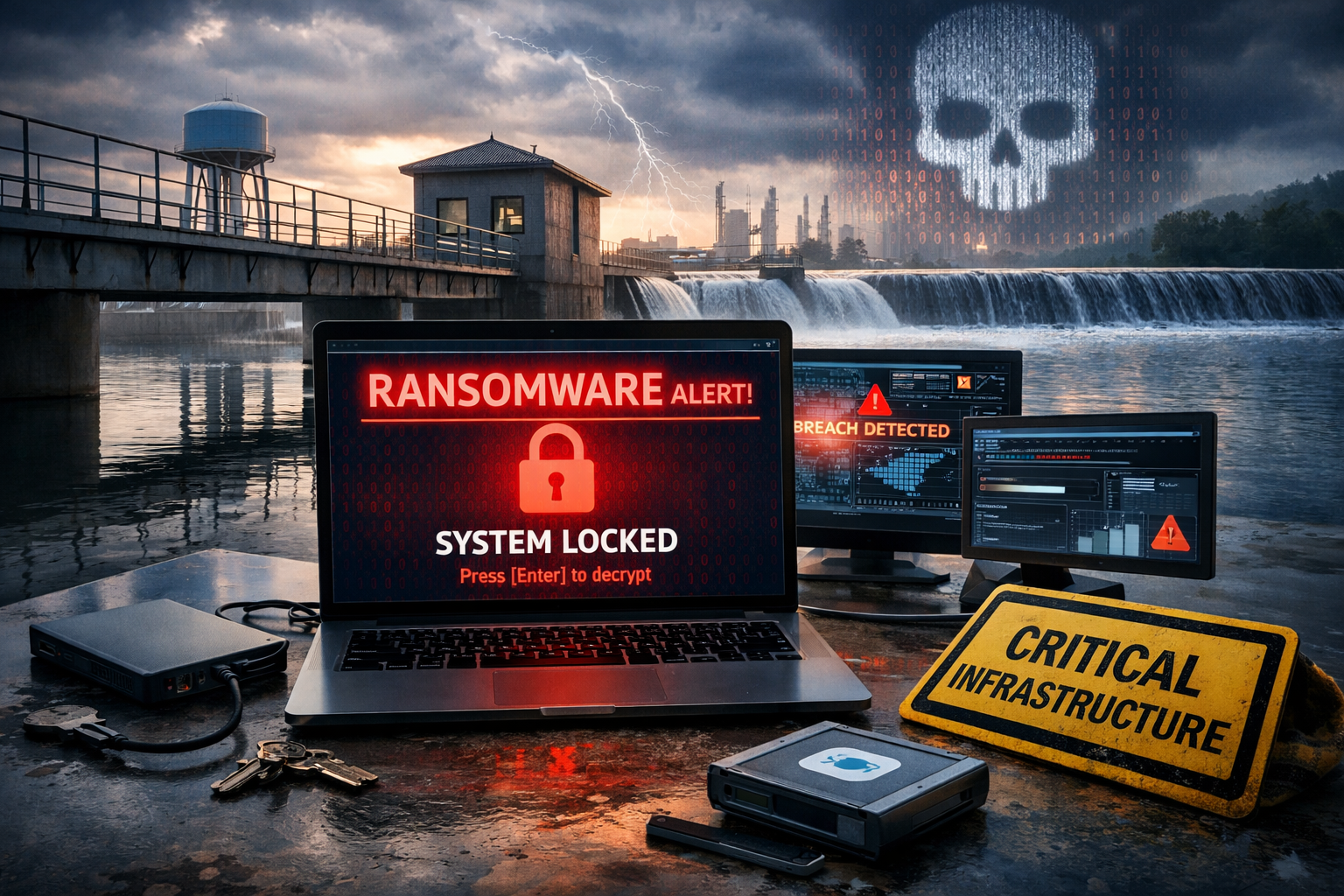
Over a weekend in late December, Romania’s national water management authority, Administrația Națională Apele Române (ANAR), reported a ransomware incident that locked staff out of roughly 1,000 computer systems across the organization and most regional offices. Reporting indicated that the attackers used a marketing leading security application to encrypt systems and left a note demanding contact within a short negotiation window.
Even when taps keep flowing and dams keep operating, an event like this is a reminder that “critical infrastructure” is not one system. It is a web of IT services, operational workflows, communications, field teams, and public trust. When any major portion of that web goes offline, the organization is forced into manual operations, workarounds, and crisis communications, all while trying to prevent the incident from spreading.
For organizations of any size, the lesson is simple: you cannot wait until the incident to find out whether you can recover fast enough.
What happened, and what “systems down, operations continue” really implies
Public reporting around the ANAR incident described broad IT disruption, including workstations and core servers used for email, web services, and other systems required for day-to-day coordination. In parallel, officials indicated that operational technologies tied to hydrotechnical infrastructure were not impacted, and that essential hydrotechnical operations continued with on-site staff.
That line, “operations continue,” can be misleading. Continuity under pressure often means:
- Manual workflows replace digital systems overnight.
- Voice calls and dispatch stand in for ticketing, dashboards, and automated alerts.
- Delayed decision making because teams lose access to data, maps, and status history.
- Higher operational risk as staff work without the normal checks, automation, or visibility.
- Long recovery tails even after the initial lockout is resolved, because every system must be validated and reconnected safely.
In other words, the organization is still functioning, but the cost, complexity, and risk are amplified until normal systems are restored.
Why critical infrastructure is a favorite target
Water, energy, healthcare, transportation, and local government share a reality: the mission cannot pause. Attackers understand that urgency creates leverage.
When you manage essential services, downtime is not measured only in lost revenue. It is measured in public safety risk, regulatory scrutiny, reputational damage, and operational strain. That pressure can make it harder to follow a clean, methodical response process, which is exactly what criminals want.
The goal may be a ransom payment, but the real weapon is disruption. Even if operational technology is untouched, taking down IT can be enough to force difficult choices.
A security application as an attack tool: what it signals, and why it matters
One detail that stood out in coverage of the ANAR incident was the reported use of a legitimate security application and its encryption feature that is designed to protect data. In an attack scenario, adversaries can abuse built-in tools like this to “live off the land,” reducing reliance on obvious, easily detected malware.
Why does that matter?
- It can reduce traditional detection signals. Some security controls are tuned to find known ransomware binaries. Using native tooling may generate fewer of those signatures.
- It can indicate control over privileged access. To encrypt at scale, attackers often need high levels of permissions, especially in Windows environments.
- It can accelerate impact. Legitimate tools are already present, which can shorten the time between intrusion and disruption.
This does not automatically mean the actor is sophisticated. Either way, the outcome for the victim is the same: widespread system unavailability and a race to restore operations safely.
The recovery takeaway: isolate, restore, validate, communicate
When a major incident hits, the most important outcome is not simply “get systems back.” It is “get systems back clean.”
A solid recovery process typically follows four priorities:
- Isolate and contain
Stop the spread. Segment affected networks, disable compromised accounts, and preserve evidence. The goal is to prevent reinfection while you recover. - Restore what matters first
Define your tier-one systems ahead of time. Identity services, core communications, critical applications, and data stores need a clear priority order. In a crisis, you do not want your team debating what is most important. - Validate integrity before reconnecting
Restore from known-good backups. Confirm that restored systems are clean and that credentials have been rotated where needed. Reconnecting infected systems too quickly can restart the incident. - Communicate clearly
People need to know what is happening, what they should do, and what not to do. Internally, you need crisp guidance. Externally, you need calm, factual updates. Confusion is costly during recovery.
This is where planning pays off. The less your team has to invent in the moment, the faster and safer your recovery will be.
A practical checklist for ransomware recovery readiness
If you want to reduce business disruption from ransomware, here are the controls that tend to matter most when things go wrong:
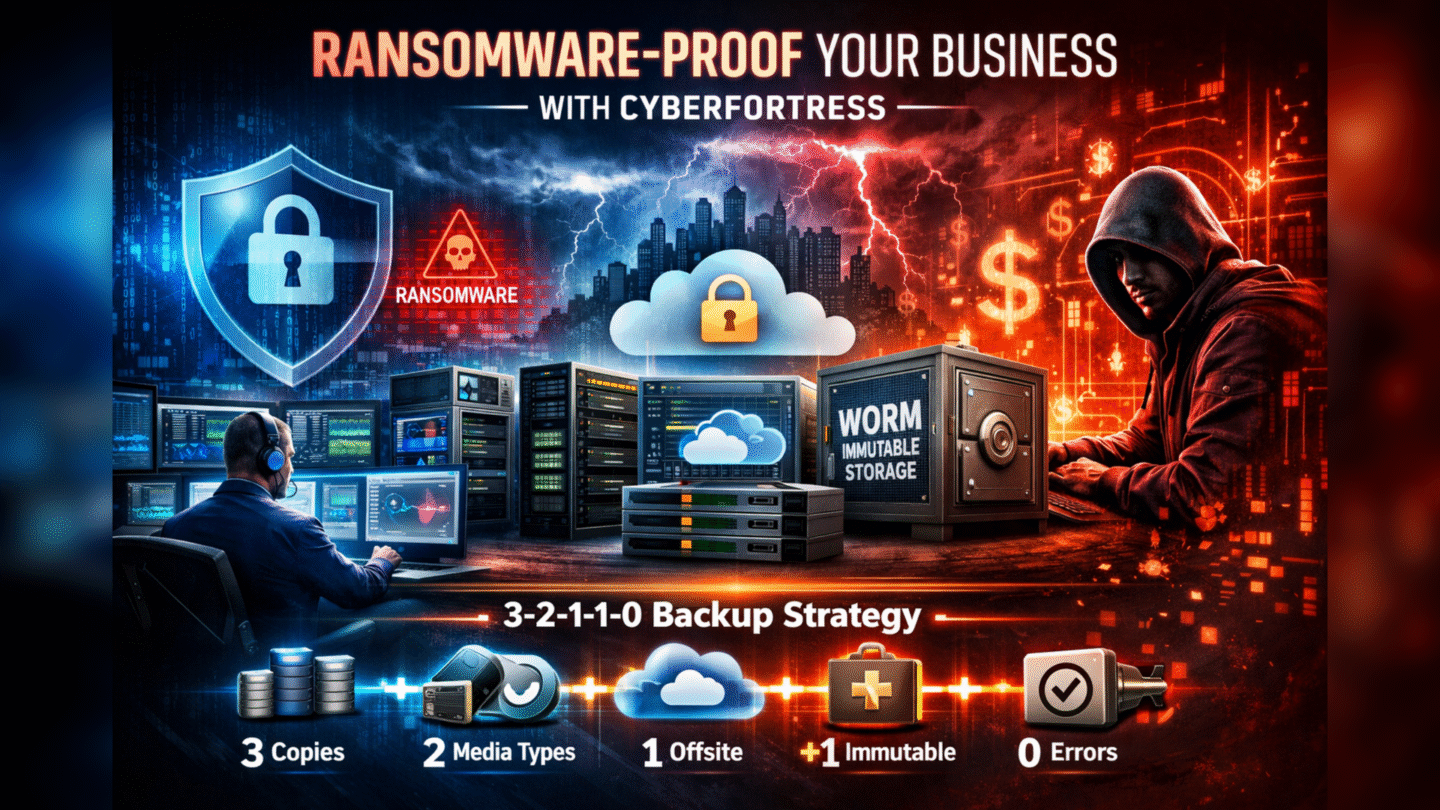
- Immutable backups that cannot be altered or deleted by compromised admin accounts.
- Offline or logically isolated backup copies to protect against domain-wide compromise.
- Documented RPO and RTO targets by system tier, aligned with what the business actually needs.
- Frequent restore testing that proves you can recover under time pressure, not just in theory.
- Identity and access protection including MFA and least-privilege policies, because ransomware often starts with stolen credentials.
- Network segmentation to limit blast radius and keep an incident from becoming enterprise-wide.
- Golden images and clean-room recovery procedures so you can rebuild safely when full trust is lost.
- Runbooks and decision frameworks that define who decides what, and when.
None of this is complicated, but it is easy to postpone. Unfortunately, ransomware does not wait for a convenient time.
How CyberFortress helps: BaaS and DRaaS designed for recovery confidence
At CyberFortress, our focus is helping organizations protect continuity and recover quickly, even when the incident is messy.
Backup as a Service (BaaS) is built to ensure you have reliable, protected backups that you can restore from with confidence. The goal is simple: when your environment is under pressure, backups must be accessible, intact, and trusted.
Disaster Recovery as a Service (DRaaS) takes the next step by helping you operationalize recovery. It is not enough to have backups. You also need a plan and a repeatable process to restore systems in the right order, validate integrity, and return to normal operations with minimal disruption.
When an event hits critical services, like in the ANAR incident, the difference between “days of disruption” and “measured recovery” often comes down to two things:
- Can you restore quickly from backups that attackers cannot destroy?
- Have you tested your recovery path enough that the team can execute calmly under pressure?
Closing thought
Ransomware in critical infrastructure makes headlines, but the core lesson applies to every organization. Attackers do not need to destroy everything to cause maximum disruption. They only need to take away your ability to operate normally.
If you want to reduce the business impact of ransomware, invest in recovery readiness now. Build a backup and disaster recovery posture that assumes stress, urgency, and incomplete information.
If you would like a practical assessment of your recovery readiness, CyberFortress can help you evaluate your BaaS and DRaaS needs, define recovery priorities, and design a plan you can trust when it matters most.